Tuesday, April 19, 2016

PATAN


Introduction to Patan:
Located about 5 km south of Kathmandu in the Kathmandu Valley, on the southern side of the Bagmati River, Patan is one of 3 royal cities in the valley. The others are Kathmandu and Bhaktapur.

A destination for connoisseurs of fine arts, Patan is filled with wood and stone carvings, metal statues, ornate architecture, including dozens of Buddhist and Hindu temples, and over 1200 monuments.
The city is known for its rich tradition of arts and handicrafts and as the birthplace of master craftsmen and artists such as Arniko and Kuber Singh Shakya.

To get a great idea of the daily life of people living in Patan, check out this terrific short film made by a traveler/ film maker named Alexander Rose, after spending 6 months in Patan.

Patan.com thanks Alexander for his work and for allowing us to link his great film from this website!
Watch the film and let him know how you feel about it.
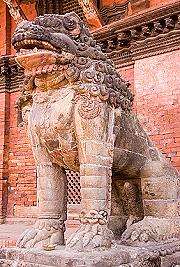


Stone lion statueTrivia & Quick Points:

  • The official name of the city is "Lalitpur" (City of Beauty).
  • This city is located in the district also called Lalitpur.
  • The city is comprised of 22 municipal wards.
  • Patan's population (as of 2006) is close to 200,000.
  • Patan is the third largest city in Nepal.
  • The economy of Patan is based on trade and commerce, tourism, art, handicrafts, and agriculture
  • The water supply in Kathmandu Valley is currently insufficient in both quality and quantity. Tourists should not drink untreated water.
  • Outbreaks of cholera and malaria occur from time to time. Tourists may want to get vaccinations for hepatitis A and B, meningitis, polio, and typhoid before visiting Patan.


Facts & Information:

History:
The city of Patan is believed to have been built in the third century B.C. by the Kirat dynasty. It was expanded by Lichhavis in the 6th century A.D. and again by the Mallas in medieval period. The Malla kings ruled the Kathmandu Valley until the ascension of the Shah dynasty. In 1768, King Prithvi Narayan Shah began his campaign to unify Nepal and Patan became a city in the kingdom of Nepal.
In the early 1800's the Shah heirs fought the Anglo-Nepalese War (1814-1816) against the British East India Company over the annexation of small neighboring states. The Nepalese lost and were forced to cede land to the British in exchange for autonomy.
In 1846, Queen Rajendralakshmi sought to curb the power of the military leader, Jang Bahadur. An armed clash between the queen's loyalists and the miliary personnel loyal to Bahadur ensued in the palace armory in Kathmandu, after which the queen had several hundred prominent men executed, including princes and chieftans. This became known as the Kot Massacre. Badahur emerged from the fighting as the only powerful leader and took the office of Prime Minister. He made the prime minister position autocratic and hereditary. During his reign he purged his enemies by killing and driving thousands into exile, including the king and queen. He replaced them with a figurehead monarch, who gave Bahadur the title 'Rana'. The rule of Bahadur and his heirs over the next 100 years became known as the Rana dynasty.
The dynasty was brought down in the 1950's by reformists who instituted a consitutional monarchy. This lasted until 1962, when King Mahendra created a panchayat system of government. This system created a pyramid structure of power based on councils from the village level to the National Parliament, with the King as head of state.
King Mahendra's son, King Birendra ascended the throne in 1972 and promised democratic reforms. He called a national referendum in 1980 to decide whether to continue the panchayat system, with reforms, or to establish a multi-party system of government. The panchayat system won a close victory.
The 1990 People's Movement ('Jana Andolan') was a cooperative effort among political parties of Nepal, including the Nepali Congress and Communist parties, to establish a constitutional democracy. It ended the panchayat system, and resulted in Nepal's first election in almost 50 years, in 1991. The following year, as a result of economic crises, a leftist group called the Joint People's Agitation Committee called for a general strike. Violence ensued, and clashes in Patan between police and activists resulted in the deaths of two activists. In Kathmandu, a crowd rallying at Tundikhel was attacked by police, resulting in an estimated 14 more deaths.
In 1995, in response to corruption, the Communist Party of Nepal (the Maoists) declared a People's war. They called for the redistribution of land, increased power for rural communities, the elimination of the caste system, equal rights for women, and the creation of a communist republic.
In 2001, Crown Prince Dipendra assassinated 11 members of the royal family, including the king and queen, and was declared King. However, he died days later of a self-inflicted gunshot wound. The brother of the assassinated King Birendra, Prince Gyanendra, ascended the throne.
In 2002, due to the escalation of the Maoist rebellion, the king took control of the government temporarily and then appointed a new government. After a Maoist siege on the Kathmandu Valley in 2004, the king declared a state of emergency and assumed full authoritarian power. The king controlled the media and placed politicians under arrest.
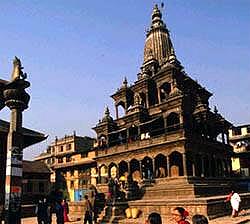
Krishna MandirIn April, 2006, as a result of protests and strikes, the king reinstated parliament. The parliament then stripped the king of most of his powers. The Maoists reached a cease-fire agreement with the government in 2006, and then took a quarter of the seats in the newly elected parliament in January, 2007. In April, 2007, five Maoist ministers were sworn in and placed in charge of the ministries of information, local development, planning and works, forestry, and women and children. Scattered conflicts continue across the country, however.

Culture
Patan is a center of Buddhist and Hindu culture. The city is full of religious art, temples, and monasteries. Many religious festivals take place in Patan each year. One is the Buddha Jayanti festival, marking the birthday of Lord Buddha, which occurs on Jestha Purnima (full moon night in April or May).
The birthday of Lord Krishna is celebrated by Hindus at the Krishna Temple in Patan in August - September. Devotees gather at the Krishna Temple in Patan Durbar Square for a vigil through the night. The following day, the devotees visit all the Krishna shrines throughout the city.
The largest festival in Nepal is the Dashain festival in September to October. This festival takes place at the Palace Complex in Patan as well as in the other cities of the Kathmandu Valley and commemorates a victory by the gods over wicked demons. The celebration lasts 15 days and includes kite flying.


Travel & Tourism:
The city of Patan offers visitors the chance to see an abundance of exquisite works of religious art and architecture. In addition, adventurous travelers can find many opportunities for trekking, mountain biking, whitewater rafting, aerial exploration of the Kathmandu Valley, and mountaineering. Many tours can be arranged from Kathmandu, just a few kilometers away.


Highlights & Features of the City and Surroundings:
  • The four Ashoka Stupas, marking the four corners of Patan, are symbolic of the Buddhist Wheel of Righteousness ('Dharma-Chakra'). Located at Pulchowk, Lagankhel, Ebahi and in Teta, t hese mounds are crowned with monuments that the Buddhist Emperor of India, Ashoka, is said to have erected in 250 B.C. Each stupa is different. Three of the mounds are covered in grass, whereas the fourth is a white mound with a colorful monument atop.

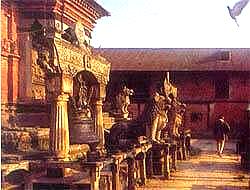
  • In the heart of Patan and the Patan marketplace, Patan Durbar Square is filled with ancient palaces, pagoda temples, stone baths, Hindu and Buddhist statues, bas relief and engravings, and bronze carvings.
  • The Palace of the Malla Kings is one of the highlights of a visit to Patan. In the palace complex lies the stone temple of Lord Krishna ('Krishna Mandur') with its 21 spires and bas-relief art depicting scenes from the Mahabharata and Ramayana epics. The temple was built by King Siddhi Narasingha Malla in the 16th century A.D. The Royal Bath (known as 'Tushahity') is another showpiece of fine stone and bronze carving in the palace complex.

    Patan Durbar Square is one of seven monument zones in the Kathmandu Valley that together have been designated a UNESCO World Heritage Site. Also located in the square is the Patan Museum, which houses bronze statues and religious objects, some dating back to the 11th century. This museum, which was originally a Malla palace, is open daily.

What to Do & See
  • The Golden Temple (Hiranya Varna Mahavihar), built in the 12th Century by King Bhaskar Verma, is located just north of Durbar square. This three-roof Buddhist monastery is adorned with a golden facade, four large gateways, a clock tower, and two lion sculptures. Inside are golden images of Buddha, wall carvings, and a prayer wheel.
  • Just outside the Patan marketplace, the Rato (Red) Machhindranath Temple is dedicated to the god of rain and plenty. It has four doorways with intricate carvings, each with figures of lions, and statues of a variety of animals atop its pilars. Set into the base of the temple are prayer wheels. This temple is the site of the Rato Machhindranath celebrations, which include a parade with a temple chariot and end in a nearby village called Bungamati. This festival takes place during April and May every twelfth year.
  • Rudra Varna Mahavihar is a Buddhist monastery with a temple and a courtyard that has many fine wood, bronze and stone statues. Kings were crowned in this temple in ancient times.
  • The Patan Industrial Estate, located at Lagankhel (near Sat Dobato) in Pata is a destination for tourists interested in purchasing fine art and handicrafts from local artisans. Handicrafts such as wood carvings, metalwork, carpets, and paintings are available here.
  • The Kumbheshwor Temple is one of only two 5 tiered temples in Nepal. Dating back to 1391, when it was built by JayastHiti Malla with two tiers, it hosts an annual pilgrimage of Hindus during the Janal Purnima day in July/August. During this event, Hindus of the Brahmin and Chhetri castes replace sacred thread that they wear over their shoulders while Jhankris beat drums and dance around the temple. Two ponds are believed to contain water that comes directly from a holy lake north of the Kathmandu Valley called Gosainkunda.
  • Just east of Durbar Square lies the Mahaboudha Temple. Made of terracotta tiles, this 'Temple of the Thousand Buddha' is modeled after the temple of the same name in Bodhgaya, India, where Buddha is said to have reached enlightenment. Each brick in the structure bears the image of Buddha. Built by the priest Abhaya Raj, the temple is believed to date back to the late 16th century. It was felled by an earthquake in 1934 but was rebuilt (albeit in a somewhat different design).
  • The Jagat Narayan TempleJagat Narayan Temple, located at Sankhamul, on the banks of the Bagmati, is a tall red brick building with many fine stone and metal statues. The temple is dedicated to Lord Vishnu.
  • To the south of Patan lies Godavari Botanical Garden, with hundreds of varieties of flora, dense forest, and open areas, this garden is popular for picnicking, bird watching, hiking, and viewing butterflies.
  • The Patan Zoo, in Jawalakhel, is the only zoo in Nepal. It was established as a private zoo in 1932 and opened to the public in 1956. It houses over 700 different animals, including 14 endangered species of Nepal. There is a pond where visitors can go boating. The zoo is closed on Mondays.
  • The Tibetan Refugee Camp on the outskirts of Patan was set up in 1960 with the aid of the Red Cross and the Swiss Development Corporation to help Tibetan refugees become self-supporting. The camp has carpet factories where tourists are able to view the process for making traditional carpets from start to finish. In addition, handicrafts such as wood and metal prayer wheels are made and sold in souvenier shops.

Monday, April 18, 2016


BHAKTAPUR

History:
Durbar Square in BhaktapurFounded in the 12th century by King Ananda Malla (according to various chronicles), Bhaktapur was the capital city of the Greater Malla Kingdom until the 15th century and was an independent kingdom from then until the 18th century.

The last three Malla rulers of Bhaktapur were Jitamitra Malla, Bhupatindra Malla, and Ranjit Malla. These rulers played key roles in building the palaces and temples of Durbar Square.
In 1744, Prithvi Narayan Shah, descendent of Dravya Shah, who was the founder of the Gorkha dynasty, began a conquest march in the Kathmandu Valley, capturing and unifying Kathmandu, Patan, Bhaktapur, and the smaller towns of the Valley under one rule.

After a period of instability and a bloody coup in 1846, Jang Bahadur Kunwar Ranaji took control of Nepal. His Rana dynasty ruled Nepal until 1951, when the Congress Party formed a new government. In 1960, King Mahendra took control, banned political parties, and instituted land reforms. Political turmoil continued throughout the late 20th century.
In 1934, a major earthquake destroyed over 2,000 houses and severely damaged over 2,000 more homes. Over 1,000 people died in this quake. Restoration of many buildings was undertaken over the years, including efforts funded by West Germany in the late 1980's and by the U.S. in the 1990's.
Visit Patan.com for more information on the history of Nepal.
Culture
Bhaktapur is filled with Hindu and Buddhist religious sites and art. Although the population is primarily Hindu, there are nineteen Buddhist monasteries (Vihars). At Indra Varna Madavihar, built in 1671 and located between Durbar Square and Dattatraya Square, visitors can see two lion statues, a Patinga Hiti (water spout), Tantric wood-carved windows, and prayer wheels.

There are also many Buddhist monuments and shrines, including Lokeswor Mahavihar, Prasannasheel Mahavihar, Chatu Brahma Mahavihar, Jaya Kirti Mahavihar, Sukra-varna Mahavihar, Dipanker Mahavihar.

Many festivals are celebrated throughout the year to mark the seasons, pay tribute to gods, and remember historical and legendary events. A few of these are:
Costumed Dancers at Festival
* Dashain, the longest festival of the year, lasting 15 days. This festival honors the goddess Devi Durga, who is said to have slain the demon Durga, son of Ruru. Celebrants perform many pujas (offerings) during this festival, including thousands of animal sacrifices. (September/October)
* Gai-Jatra, the Cow Festival. This festival focuses on families in bereavement. Every family who lost a relative in the past year participates in a procession with a cow or a young boy dressed as a cow. The cow, it is believed, helps the deceased reach heaven. (July/August)
* Bisket Jatra, the Nepalese New Year celebration, in which chariots are pulled through the streets and ultimately a tug of war over them determines who will be blessed with good fortune in the coming year. This celebration is also observed with picnics and other private get-togethers. (April)

* Tihar, the festival of lights, honors Laxmi, the goddess of wealth. The Nepalese light up their homes with candles, oil lamps, and other lights to invite the goddess Laxmi in.

They also worship crows, dogs, and cows during this festival and set aside one day to honor brothers. The Mha puja, a day of revering one's own body and life, is celebrated on one day of this festival. (October)
* Handicrafts - Tourists can watch potters create works of art in the Pottery Squares. Indigenous (Newar) handicrafts include paubha scroll paintings, papier-mâché masks, cotton cloth, woodcarvings, metalwork, jewelry and ceramic products, haku-patasi (black sari), black caps and Juju-dhau (yogurt).


Travel & Tourism:
Bhaktapur is rich in architectural beauty, filled with ancient Hindu and Buddhist religious sites, and palaces and courtyards where tourists can easily spend days absorbing the traditions and culture of the Newars.

Bhaktapur's Durbar ('Royal') Square was added to the list of World Heritage Sites by UNESCO in 1979.

Highlights & Features of the City and Surroundings:
Durbar Square
  • Almost 1/3 of the ancient temples, monasteries, and other ornate buildings were destroyed in the earthquake of 1934. Yet many gems remain.

  • In Durbar Square, tourists will find the 55-Window Palace, which served as the seat of royalty prior to 1769. The palace has elaborately carved windows and doors and houses the National Art Gallery, with Buddhist Paubha scroll paintings, palm leaf manuscripts, and stone carvings.
  • Yachheswor Mahadev TempleJust outside the palace, at the entrance to the Taleju Temple Complex is the Golden Gate, built in 1756, a splendid example of Repoussé metalwork. There also lies the Royal Bath, with its Golden Faucet.
  • Durbar Square is also home to the Big Bell, built by the last Malla king of Bhaktapur, Ranajit Malla in the 18th century. It was rung to pay homage to the Goddess Taleju and to harken the public to town meetings.

    Today it is rung twice a day as a tribute to the Goddess Taleju. Next to this bell is the Barking Bell, so named because dogs bark to its ring.
  • Also in the Square lies the Yaksheswor Mahadev Temple, built by Yaksha Malla in the 15th century. It was modeled after the Pashupatinath temple in Kathmandu and was designed with ornate wooden struts decorated with erotic carvings.
  • Other sites in and around the square include the octagonal Chyasin Mandap, Siddhi Laxmi Temple, Shiva Temple (Fasi-dega), Vatsala Temple, Bhandarkhal Complex, Chatu Brahma Mahavihar, Indrayani Temple, Balakhu Ganesh Temple, Tripura-sundari Temple and the Char Dham symbolizing the four greatest Hindu pilgrimage sites.
  • The Phasi Dega Temple, dedicated to Lord Shiva, affords expansive views of the entire city.


Taumadhi Square
  • The Nyatpol (or Nyatapola) Temple, dedicated to the Goddess Lakshmi, lies in this square. Built in 1702 with 5 stories, this is Nepal's tallest pagoda temple.

    It's struts, doors, windows, and tympanums are decorated with carvings of divine figures, including a pair of 2 m high stone statues of the legendary Rajput wresters-Jaimal and Pata; a pair of elephants, a pair of lions, a pair of griffons and a pair of tantric goddesses known as Singhini and Toyahagrini.
  • The Bhairavnath Temple, which was destroyed by an earthquake in 1934 and subsequently rebuilt, houses a gilded bust of the terrifying Bhairav, considered either a manifestation of Lord Shiva or a deity that guards his home.
  • Also here are a Pottery Square and the Temple of Jeth Ganesh, dating back to the 14th century.
Dattatreya Square
  • In this square, lie many of Bhaktapur's Hindu monasteries, called maths, as well as temples and museums. The three-story pagoda-style Dattatreya Temple, with statues of the Hindu trinity, was built by King Yaksha Malla in 1428. It is claimed that the building was constructed from a single piece of wood from one tree.

    At the entrance are two large sculptures of the Jaiput wrestlers, Jaimala and Pata (as in the Nyatapola Temple), a “Chakra”, and a gilded metal statue of Garuda, a bird-like divinity. Around the temple are wood carved panels with erotic decorations.
  • During the Mohani (Dashain) festival, in the Wane Layaku complex, which lies just southwest of the Dattatreya Temple, a rare Ghau-batacha (water clock) is displayed.
  • The Pujari Math, which houses the Woodcarving Museum and dates back to the early 15th century, is adorned with the intricately carved Peacock Window. The Chikanpha Math, across the street, houses the Brass and Bronze Museum, with its collection of ancient Malla housewares and ritual metalware.
  • In Dattatreya Square, lies a Pottery Square, where potters work and display their handicrafts.

What to Do & See Around Bhaktapur
  • Datatryaya PagodaNagarkot - The second-highest point on the Kathmandu Valley rim, Nagarkot, at an altitude of 2,175, offers panoramic views of the Himalayas and Mt. Everest. It lies 20 km northeast of Bhaktapur. The area offers hiking trails that lead into Tamang villages.
  • Changu Narayan - The oldest temple in the valley, build in 464 AD by Kind Mandev, the Changu Narayan lies 6 km north of Bhaktapur. A popular hiking trail leads from here to Nagarkot.
  • Thimi - Thimi is a traditional Newar city noted for its a vegetable garden and handicrafts. It lies about 5 km west of Bhaktapur.
  • Bode - This town, about a 20-minute walk from Thimi, hosts the the river-side shrine of Nil Barahi. Each year on the second day of the Nepalese New Year, the town celebrates the tongue-boring festival, in which a villager has a thin metal spike thrust through his tongue by the temple’s priest. After parading around town carrying a bamboo rack of oil lamps, the spike is removed and packed with mud from the temple floor. If no blood flows, the villager earns great respect for himself and the town; however, if blood flows it is considered a bad omen for the coming year.
  • Surya Vinayak Shrine - The Surya Vinayak is just a 10 to 20 minute walk from Bhaktapur and attracts visitors and locals praying for good luck to the god Ganesh. The shrine is located in a forest at the top of a hill.

Sunday, April 17, 2016


Something about Nepal


Places to visit in Nepal

KATHMANDU CITY
Kathmandu is known as Kantipur, the kingdom of Nepal. Here you will visit the temple of the living Goddess, who acknowledges the greetings of her devotees from balcony of her temple residence, Kathmandap-the source of the name Kathmandu. It was allegedly made from the timber of a single tree. Next, on to the Durbar Square area with its array of temples overlooked by the Hanuman Dhoka Palace, the ancient palace of the Nepalese Royalty.

PASHUPATINATH
Lying 6 Km from central Kathmandu, Pashupatinath temple is one of the holiest Hindu temples dedicated to Lord Shiva. Situated amidst a lush green natural setting on the bank of the sacred Bagmati river, the temple, which was built in pagoda style, has a gilded roof and beautifully carved silver doors. Visitors will be permitted to view the temple from the east bank of the Bagmati river, as entrance into the temple is strictly forbidden to all non-Hindus. Pashupatinath is the centre of an annual pilgrimage on the day Shivaratri, which falls in February or March. Behind the temples are the cremation grounds.
Dakshinkali
Literally meaning the Kali of the south, this temple is dedicated to the Goddess Kali, the Hindu goddess of power. Goats, chickens, ducks etc. are sacrificed on Tuesdays and Saturdays. The temple itself is located in a forested canyon and lies 19 Km. from Kathmandu.
Boudanath
This stupa, situated 11 Km. from the center of Kathmandu, is one of the biggest in the world of its kind. It stands with four pairs of eyes in the four cardinal directions, keeping a lookout for righteous behavior and human prosperity. This Buddhist stupa was built by King Man Deva at the advice of the Goddess Mani Jogini. It is built on an octagonal base and is contains inset prayer wheels. The shrine is surrounded by the homes of Lamas, or Buddhist priests.
Swayambhunath
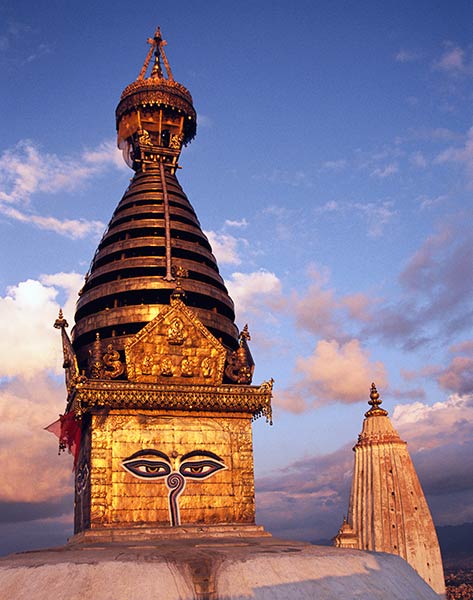
Located approximately 3km from the center of Kathmandu, this Buddist stupa is said to be 2000 years old. The stupa which forms the main structure is composed of a solid hemisphere of brick and earth which supports a lofty conical spire capped by a pinnacle of gilt copper.
Painted on the four sided base below the spire are the all seeing eyes of lord Buddha. The whole area around the Stupa contains an array of small stupas and temples. This is one of the best places from which to view the Kathmandu valley, as it is situated an a small hillock.

BHAKTAPUR
Also known as BHADGAON meaning the city of devotes, this place is the home of medieval art and architecture. Lying 14Km east of kathmandu city. This place was founded in the 9th century and is shaped like a conch shell. The city is at the height of 4600 ft. Above sea level. In Bhaktapur you will visit the Durbar Square with its array of temples overlooked by the palace of 55 Windows built by King Bupatindra Malla, the Nytapola Teple. This temple, which was also built by king Bhupatindra Malla, is the best example of the Pagoda style and stands on five terraces, on each of which stands a pair of figures, famous strong men, elephants, lions, griffins and goddesses. Time permitting, a visit to the museum of Thanka painting can also be considered. A 30 minute walk brings you to the Dattatraya temple and Pujari Math which can also be done provided there is plenty of time at the clients' disposal.
Nagarkot
It is situated about 35Km. east of Kathmandu city and from here one can see Mt. Everet and other peaks of the Himalayas. Nagarkot is located between Kathmandu valley in the west and Indravati in the east.
The top of Nagarkot commmands accelerating views in all direction. The altitude of Nagarkot is 2229Mt. Above from sea level. It is also very popular for the viewing sunrise and sunset.


Dhulikhel
It is situated at an altitude of 1600 m. above from sea level and 32 Km. From Kathmandu City. Dhulikhel is famous for its vantage location in viewing the Himalayan ranges, from Cho Oyu in the east to Himalchuli in the west. It is popular for viewing the sunrise and sunset.


Patan
5 Km. away from Kathmandu city. Patan, also known as Lalitpur, is a city of fine arts, enclosed within 4 stupas, which are said to have been built in the 3rd century A.D. by Emperor Ashoka.
You will see Durbar square, the Patan durbar (palace), which houses a bronze collection, the Krishna temple built by King Siddi Narsinh Malla, Hiranya Varna Mahavihar, and Mahaboudha Temple.
A trip to the Tibetan Refugee Centre and the Handicraft Centre will be included during your visit to Patan, where you will witness the hand weaving of Tibetan carpets and molding of metal statues. There are many other place to vist which are:

Kathmandu Darwar Square
Sleeping Bishnu
Ason Bazar
Kopan Monasteries; http://www.kopan-monastery.com
Pahrping Monasteries
Daksin Kali Temple
Orphans schools in Kathmandu
Nepal National Museum
Freak street
New road (Cheapest place to buy electronics goods)
Chitwan National Park Jungle safari
Pokhara Valley
Pokhara is Nepal's second most popular tourist destination and its adventure capital. It is overshadowed by a massive wall of the Himalayas, and dominated by the towering peak of the Annapurna range. Even more impressive is the fishtailed pinnacle of Mt. Machhapuchhare (6977 mt.) For the adventurous, the massif of Mt. Dhaulagiri (8167m) waits to be explored. Pokhara is the starting point for the most famous treks in Nepal, in the Annapurna area. Pokara is situated 200 K.M. west of Kathmandu.
What to See
Phewa Lake: The second largest lake in the kingdom, this is the center of attraction in Pokhara. The eastern shore, popularly known as lake side, or Baidam, is the favorite hang out for travelers, and is where most of the hotels, restaurants, and handicraft shops are located.
Begnas & Rupa Lake - The lakes offer the perfect natural retreat because of their relative seclusion. Splendid boating and fishing oppertunities can be had here.
Barahi Temple: The most important religious monument in Pokhara, built almost in the middle of Phewa Lake, this two storied pagoda is dedicated to the manifestation of Ajima, the protectress deity who represents the female force.
Seti Gandaki: Flowing right through the city, this turbulent river runs completely underground in places. Amazingly, at certain points, the river hardly appears to be two meters wide, but it is quite deep, up to over 45 meters.
Devi’s Fall: Locally known as "Pataley Chhango", this is an awesome waterfall lying about two km. southwest of Pokhara airport. Legend has it that a trekker (Devin David….) was washed away by the Pardi Khola (river) and mysteriously disappeared down into an underground passage beneath the fall.
Mahendra Gupha (cave): Another of nature's wonders in Pokhara is the Mahendra Gupha. This large limestone cave is locally known as the house of bats, which is an apt name for it. A two hour walk to the north of Pokhara, it is best to bring your own torch in order to see the stalactites and stalagmites, as well as the local winged residents.
Lumbini
The birth place of Lord Buddha
Nepal is as well known to the world as the sacred birth place of Lord Buddha as it is famous for its mountains and monuments. It attained a high level of civilization and prosperity, and its acclaim is well deserved. Buddha was born into a royal family. Immediately after his birth, he took seven steps in the four cardinal directions, and wherever he set foot, a divine lotus flower bloomed.
The main attraction at Lumbini is the Secred Garden, which is spread out over 8 sq km and contains all of the treasures of this historical area. The Mayadevi temple is the main attraction for pilgrims and archaeologists alike. Here we find a bas relief that shows Mayadevi, the Buddha’s mother, giving birth to him. Standing west of the Mayadevi shirine is the oldest monument in Nepal, the Ashoka Pillar. The pillar was erected by Emperor Ashoka in order to commemorate his pilgrimage to the sacred site.

ILLAM


Ilam
Ilam distric is one of the seventy-five districts of Nepal, The district, with the town of Ilam as its district headquarters, covers an area of 1,703 km² and has a population (2001) of 282,806. It is about 600 km from Kathmandu. The highest point is Sandakpur with an elevation of 3000m. Ilam attracts many researchers who come to study rare birds and tea estate. Ilam stretches from the Terai belt to the upper hilly belt of this Himalayan nation.
The name Ilam is derived from the Limbu language in which "Ii" means twisted and "Lam" means road. Ilam was one of the ten self ruling states of Limbuwan before the unification of Nepal, its ruler King Hangshu Phuba Lingdom of Lingdom dynasty ruled Ilam as a confederate state of Limbuwan until 1813 AD. The treaty between the other Limbuwan states and the King of Gorkha (Gorkha-Limbuwan Treaty of 1774 AD) and the conflict of Gorkha and Sikkim led to the unification of Ilam with Gorkha. Ilam was the last of the ten kingdoms of Limbuwan to join the union of Nepal. The King of Gorkha gave the ruler of Ilam full autonomy to rule and the right of Kipat. Ilam was an independent Limbu kingdom until 1813 CE/1869 BS.
Ilam is today famous in the world for tea production. Its ILAM TEA is very famous and is exported to many parts of Europe. The main source of income in this district is tea, cardamom, milk, ginger and potato.
This place also has a religious importance. The devi temples have a great importance attached to them and many people come here just for pilgrimage.
The major attraction of Ilam is the 9-cornered Mai Pokhari lake. Also known as the abode of the goddess lots of tourists as well as Nepalese people come to visit this lake. Mai river and its four tributaries also emerge in Ilam district. The famous Mane Bhanjyang (Mane pass) connects Ilam with Darjeeling district of West Bengal, India.
This region is famous for the tea plantation in Nepal, perhaps in the world as Ilam Tea. Though the tea plantation was practised in Ilam about 138 years ago for the first time, the tea plantation revolution has started 10/15 years before only.
Ilam Valley Tea, the finest quality orthodox tea, is produced by one of the most modern factory Himalayan Shangri-la Tea Producers (p) Ltd., a subsidiary of New Ilam Tea Industries (P) Ltd., one of the pioneers of high quality orthodox tea packers & exporters in Nepal with over 30 years of experience in the tea industry.
The factory was established in the year 1999 and is situated at Nepaltar on the top of Mahabharat range, 18km. inside on the highway to Taplejung from Ilam town. It is a central factory and the green leaves are collected from the small scale farmers in the region where, more than six hundred small tea growers are involved on a day to day basis.
Since, the ecology, climate altitude and the virgin fertile soil of this region is very suitable for high quality orthodox tea and the green leaves are plucked from the very young and healthy bushes at an altitude of 5000ft. Shangri-la Tea producers (p) Ltd., producers the best quality Ilam Valley Tea that gives mellow, pure natural flavour and fascinating character.
Ilam, the divinely bestowed upon the nature is situated in the far eastern region of the beautiful HimalayanKingdom, Nepal. This picturesque region lies at the bottom of Mt. Kanchanjunga, the third highest peak of the world and is fully covered by structure, virgin fertile soil, diverse climate and its own arts and unique style. The people are friendly and hospitable.

Geography and climate

Climate Zone        Elevation Range                       % of Area
Lower Tropical below 300 meters (1,000 ft) 15.5%
Upper Tropical 300 to 1,000 meters
1,000 to 3,300 ft.
33.5%
Subtropical 1,000 to 2,000 meters
3,300 to 6,600 ft.
40.1%
Temperate 2,000 to 3,000 meters
6,400 to 9,800 ft.
10.6%
Subalpine 3,000 to 4,000 meters
9,800 to 13,100 ft.
 0.3%

Some facts about Nepal


BUTWAL

Butwal (Nepali: बुटवल) is a sub-metropolitan city and the urban core of a rapidly growing urban agglomeration in Nepal. It lies in Western Development Region, Lumbini Zone in Rupandehi District and it acts as the administrative headquarter for Lumbini Zone. It is situated at the bank of Tilottama River Tinau River 265 km west of Kathmandu, 161 km south of Pokhara, 147 km east of Ghorahi, Dang and 22 km north of Siddharthanagar Bhairawaha, at the northern edge of the Terai plain below the Siwalik Hills. Its name is derived from Batauli Bazaar in the town's oldest district.

Image result for about butwalGeographically, Butwal is the midpoint (Cross Roads) of the Nepal's National Highway, Mahendra Highway and Siddhartha Highway. It connects western Nepal to the capital Kathmandu through highway and air links. It has become one of the fastest-growing cities in Nepal in terms of mainly education, infrastructure, highway, marketing, health and safety, communication, trade and banking sectors. It has highway connections to the Indian border at Sunauli and to the hilly towns in Tansen and Pokhara valley, and has held the title of being "The Best City in Nepal" twice.

Some notable areas of Butwal are:

Butwal was officially declared a sub-metropolitan city on 2 December 2014 by combining two neighbouring VDCs Motipur and Semlar.

Saturday, April 16, 2016

Swayambhunath Stupa, Kathmandu

                                                                   Swayambhunath Stupa, Kathmandu, Nepal
Swayambhunath Stupa, Kathmandu, NepalA golden spire crowning a conical wooded hill, Swayambhunath Stupa is the most ancient and enigmatic of all the holy shrines in Kathmandu valley. Its lofty white dome and glittering golden spire are visible for many miles and from all sides of the valley. Historical records found on a stone inscription give evidence that the stupa was already an important Buddhist pilgrimage destination by the 5th century AD. Its origins however, date to a much earlier time, long before the arrival of Buddhism into the valley. A collection of legends about the site, the 15th century Swayambhu Purana, tells of a miraculous lotus, planted by a past Buddha, which blossomed from the lake that once covered Kathmandu valley. The lotus mysteriously radiated a brilliant light, and the name of the place came to be Swayambhu, meaning 'Self-Created or Self-Existent'. Saints, sages and divinities traveled to the lake to venerate this miraculous light for its power in granting enlightenment. During this time, the Bodhisatva Manjushri was meditating at the sacred mountain of Wu Tai Shan and had a vision of the dazzling Swayambhu light. Manjushri flew across the mountains of China and Tibet upon his blue lion to worship the lotus. Deeply impressed by the power of the radiant light, Manjushri felt that if the water were drained out of the lake Swayambhu would become more easily accessible to human pilgrims. With a great sword Manjushri cut a gorge in the mountains surrounding the lake. The water, draining away, left the valley of present day Kathmandu. The lotus was then transformed into a hill and the light became the Swayabhunath Stupa.
Stairway to Swayambhunath Stupa, Kathmandu, Nepal. Notice the monkeys sitting on Buddha's head
Swayambhunath's worshippers include Hindus, Vajrayana Buddhists of northern Nepal and Tibet, and the Newari Buddhists of central and southern Nepal. Each morning before dawn, hundreds of pilgrims will ascend the 365 steps that lead up the hill, file past the gilded Vajra (Tibetan: Dorje) and two lions guarding the entrance, and begin a series of clockwise circumambulations of the stupa (Newari Buddhists circle in the opposite, counterclockwise direction). On each of the four sides of the main stupa there are a pair of big eyes. These eyes are symbolic of God's all-seeing perspective. There is no nose between the eyes but rather a representation of the number one in the Nepali alphabet, signifying that the single way to enlightenment is through the Buddhist path. Above each pair of eyes is another eye, the third eye, signifying the wisdom of looking within. No ears are shown because it is said the Buddha is not interested in hearing prayers in praise of him.

                                                                          Dorje at Swayambhunath Stupa, Kathmandu, Nepal      
The area surrounding the stupa is filled with chaityas, temples, painted images of deities and numerous other religious objects. There are many small shrines with statues of Tantric and shamanistic deities, prayer wheels for the Tibetan Buddhists, Shiva lingams (now disguised as Buddhist chaityas and decorated with the faces of the the Dhyani Buddhas), and a popular Hindu temple dedicated to Harati, the Goddess of smallpox and other epidemics.The presence of the Harati Devi temple signifies the intermingling of the pantheons of Hinduism and Buddhism in the development of the religious trends of Nepal. As Buddhists had no deity in their own pantheon to protect against the dreaded smallpox, they adopted the Hindu deity for assistance.

                                                                                     Shantipur Shrine at Swayambhunath Stupa    
Atop Swayambhunath hill is another fascinating, though smaller and less visited temple. This is Shantipur, the 'Place of Peace', inside of which, in a secret, always locked, underground chamber lives the 8th century Tantric master Shantikar Acharya. Practising meditation techniques which have preserved his life for uncounted centuries, he is a great esoteric magician who has complete power over the weather. When the valley of Kathmandu is threatened by drought, the King of Nepal must enter the underground chamber to get a secret mandala from Shantikar. Soon after the mandala is brought outside and shown to the sky, rain begins to fall. Frescoes painted on the inside temple walls depict when last this occurred in 1658. The small temple has a powerful atmosphere; it is mysterious, stern and slightly ominous.
                                                                Inner Door, Shantipur Shrine at Swayambhunath Stupa    
Swayambhunath stupa is also called the `Monkey Temple' because of the many hundreds of monkeys who scamper about the temple at night after the pilgrims and priests have departed. Nearby the Swayambhunath hill are other important temples such as the Shiva Jyotir Linga temple of Pashupatinath, Boudhanath stupa, Changu Narayan, Dakshinkali, and Budhanilkantha. Readers interested in studying the sacred sites of the Kathmandu valley in detail are referred to the works of Bubriski, Majupuria and Moran listed in the bibliography. 

Tuesday, April 5, 2016

Biratnagar

 Biratnagar is Nepal’s second biggest city which is located near the south-eastern border to India. It is known by agriculture, commerce and industry. Country’s most manufacturing industries are located in this region. Tourists discover Biratnagar on their way to the Himalayan states of India, known as Sikkim and Darjeeling. Visitors also arrive Biratnagar by air to begin their trekking to mountains such as Kanchanjunga. In recent days, a day or two is also spent at Biratnagar city by tourists adventuring into Nepal’s tea growing regions like Illam and Dhankuta.
What is Biratnagar known for?
 Nepal's first large scale industry was setup in Biratnagar, the Biratnagar Jute Mills in 1936. Today, the city has some of the largest industrial undertakings in the country. It is Nepal\\\'s second biggest city which is believed to be the capital of language, culture and politics of the country. Biratnagar Jute Mills, was set up here in 1936. Koshi Tappu Wildlife Reserve (90-minute drive) is a bird watching spot. The Koshi Barrage on the Koshi river (two-hour drive) is an impressive sight. Biratnagar is the hub of air routes in eastern Nepal. (Temperature 8-39 degrees Celsius.)

Places to Visit in Biratnagar:

Baraha Chhetra: Take an hour\\\'s splendid scenic drive away from Biratnagar to Baraha Cheetra, an important Hindu pilgrimage site located at the confluence of Koka and Sapta Kosh rivers. Walk for 15 minutes from the nearby surroding area to reach the temple. Temple offers magnificiant view of the surrounding view of the riverside. Reach the temple by local bus for less Rupees or by hired taxi for Rupees 2000 to Rupees 2500. On the banks of the river, view devotees taking holy baths. According to Hindu Legand, Lord Vishnu came down to earth and destroyed Hirayankashyapu, an evil demon at this very spot.

Biratnagar Haat Haat Bazaar: Open Market (Haat Bazaar) takes place every Wednesday in a field east of Biratnagar. Make sure to visit the Haat when you get to this place.

The Koshi Tappu: Visit this wet wonderland in Nepal for bird watching expeditions. It rests along the flood plains of Sapta Koshi river in the Terai belt of Saptari and Sunsari districts of eastern Nepal. It is belived to be one of the best wild life rich wetlands of Asia. Two hours drive from Biratnagar is all it takes to discover a hidden wetland in Asia.

Getting to Biratnagar: Biratnagar is linked with Kathmandu by Road and Air. Fly from Kathmandu to Biratnagar for 40 minutes, or take a bus for about 8 hours.

Biratnagar, Nepal\\\'s second largest city, is more famous for giving more superior political leaders to the country than any other part of Nepal. It equally is known for being industry power-house of the counry. It is located in Koshi Zone on the southern Terai belt of Nepal, near the south-eastern border with India. The population of the municipality according to the 2001 census was 166,674. Biratnagar is located at 26°28\\\'60\\\"N 87°16\\\'60\\\"E.It is the administrative centre of Morang district.

Fortunate to boast immense fertile land mass, Biratnagar is also reputed for being agro-and -commerce hub. Being located on southern part, the city actually borders Indian town, called Jogbani, where lot of locals go for shopping, or to travel some other parts of India.
Biratnagar is linked with Kathmandu by road and air. Biratnagar Airport is the regional hub for vital air services serving the remote Eastern Hills, and there are regular flights to Kathmandu.

Climate
The weather in Biratnagar is mostly hot. Temperature ranges from 8 to 39 degrees Celsius. Most Biratnagarites like to call their city a place that exhibit every season with its extreme prowess. Biratnagar experiences 6 seasons,
Season Span (Hindu calendar) Span (Georgian calendar) Characteristics
Basanta (Spring) Chaitra-Baisakh March-April Around 25-30 degrees, marriage season
Grishma (Summer) Jestha-Ashad May-June Very hot, Up to 40 degrees temperature, farmers gear up for rice planting
Barsha (Monsoon) Shrawn-Bhadra July-August Very hot, very humid and heavy monsoon rains, Krishna Janma Asthami (Birth of Lord Krishna) celebrations
Sharad (Autumn) Ashwin-Kartik September-October calm temperatures, festive season of Dashain and Tihar
Hemanta (Pre winter) Mangshir-Pausha November-December Very pleasant temperatures and somtimes cold (20-25 degrees), farmers reap the rice
Sishir (Winter) Magh-Falgun January-February Quite cold, But very pleasant during occasional sunshine. Temperatures can go below 5 degrees.

Industry

In 1936 Nepals first large scale industry, the Biratnagar Jute Mills, was set up in Biratnagar at cost of 160,000 Indian rupees[2], it is the largest jute mill in the country.Today, the city has some of the largest industrial undertakings in the country. While taking a bus travel to Biratnagar from any other places, one can see a large number of industries on both sides of highway. Hundreds of small and medium sized industries operates freely including chemical, edible oil, steel,rice mill, liquor, soaps factories, among others, covering large portion of area that links Biratnagar with Itahari, a central transit point of eastern Nepal.

Lately, these medium and large sized factories are facing a hard time as a result of constant political upheaval in the country. Also it has been affected by \\\"Madhesi movement\\\", an uprising that the minority ethnic people in the Tarai have started against the regression and humiliation that they claim to have suffered for a long time, from the state, and \\\" Pahades\\\", people belonging to majority ethnic group.

Demography

Biratnagar, with a population of 166,674, is Nepal\\\'s second biggest city it also lies in area where most of nation\\\'s Muslim minority live. In March 2008 two people were killed at the Choti mosque during evening prayers - a political group supporting monarchy in Nepal,Nepal Defence Army carried out the attack, the attack lead to a curfew being imposed on the district.


Transport

In 2008, a survey for a railway extension from India is underway.

Tourism

The Koshi Tappu Wildlife Reserve (90-minute drive) is a bird-watching spot. The Koshi Barrage on the Koshi river (two-hour drive) is an impressive sight. Biratnagar is the hub of air routes in eastern Nepal.

Tourists discover Biratnagar on their way to the Himalayan states of India, Sikkim and Darjeeling. Visitors also arrive Biratnagar by air to begin their trekking to mountains such as Kanchenjunga. In recent days, tourists adventuring into Nepal\\\'s tea growing regions like Ilam and Dhankuta often spend a day or two in Biratnagar

Religious fare

Biratnagar equally is famous for its high-spirit during festive seasons. In Dashain, Nepal\\\'s biggest festival, large number of people, including youths do queue up in Kali Mandir, that is located in the city\\\'s downtown. Also famous is Biratnagar\\\'s Tihar, second biggest festival, as the city is lighted full with candles and lot of sweets. More fireworks are done in this place than any other major cities of Nepal in Tihar.

Political heartland

Biratnagar, being land of B P Koirala,the first elected Prime Minister of Nepal, has always been fertile place for emerging politicians. High-flying leaders like Mahesh Acharya, Sailaja Acharya of Nepali Congress and communist leaders like Manmohan and Bharatmohan Adhikari have their residences in this city. The iron man of Nepalese Politics and the man who has been elected prime minister most number of times in Nepal,Girija Prasad Koirala, also hails from Biratnagar. His residence lies opposite the Koshi Zonal Hospital.

Places

* Bagalamukhi Mandir: It is famous temple in biratnagar. Special day for worshipping in this temple is Thursday. Myth about this temple is that demon Bagala was torturing people and people worshipped for goddess and goddess came to rescue people and she killed that demon. People made this temple to tribute to that goddess which they called Bagala. Later this name changed into Bagalmukhi.

* Baraha Kshetra : It is an important Hindu pilgrimage site located at the confluence of Koka and Sapta Koshi rivers. According to Hindu legend, Lord Vishnu as His fourth avatar Lord Nrsimhadeva came down to earth and destroyed Hiranyakashipu, an evil demon at this very spot.

* Pitchara: It is in the west of Bus Park of Biratnagar. There is a BKVM school and a Durga Mandir. A monastery is being constructed there.

* Biratnagar Haat Bazaar: a weekly open-air market basically for selling and buying of vegetables, meat and other essentials, take place every Mondays, Wednesdays, Thursdays and Saturday in different parts of Biratnagar.

* Madhumara, Hamro Chowk: It is the most beautiful place in Biratnagar. The atmosphere of this place is quite hygienic and fresh, with plenty of green plants, it is a residential area.

* Koshi Project Chowk: It is a important government and residential area of Biratnagar, located near Mahendra Morang Campus - a public campus of Tribhuvan University. The area is mainly popular for the offices of the biggest project of Irrigation of Sunsari district and Morang district.

* The Koshi Tappu: A wet wonderland in Nepal famous for bird-watching expeditions. It rests along the flood plains of Sapta Koshi river in the Terai belt of Saptari and Sunsari districts of eastern Nepal. It is believed to be one of the best wildlife-rich wetlands of Asia. Two hours drive from Biratnagar is all it takes to discover a hidden wetland in Asia.

* Jogbani: Jogbani is a city serving border between Nepal and India. It is a major shopping destination for people of Biratnagar as well as nearby cities like Dharan and Dhankuta.From Jogbani any one can travel towards innerpart of INDIA by Train or by Roadways.Also Jogbani has got huge market for the Nepalese society people to get GOODS in low price than in NEPAL.

* Aqua Park: It\\\'s situated in the corner of Biratnagar and usually couples come on around in the place for dates. You can often see one kissing, hugging in the place.

* Budhnagar gram: It is situated southern east of Biratnagar city and known as a capital of pre historic king Birateswar. It is nearly endangered heritage of Nepal. King Birat ruled over this region in historic period and even there we can find the palace of king Birat.........

* Jamun Gachhi: This place lies in the western boundary of Biratnagar i.e. near Keshalya River. This place is on of the faster developing places in Biratnagar. There\\\'s a big Grossary shop and A mini departmental store. Recently, it\\\'s been declared as \\\'No Alcohol\\\' zones. People of this place are cooperative and they have recently build a highway linking to Sunsari District of Nepal.

* Bargachhi: This place is mainly known for Gograha School. It falls on the way as you travel from the airport to Jogbani. It is also known as the hub of the \\\"Monkey Gang\\\" which was notorious in the 1990s.

* Pokharia: It is a heart of samrat sporting club it is in the northern direction of Biratnagar and this place was named after the public school called \\\"Pokharia School \\\" established in 1959.

Culture

The Culture of Biratnagar is the blend of Indian and Nepalese cultures. A lot of festivals are the same but only the manner in which they are celebrated differs among Nepalese and Indians living in Biratnagar. Some of the popular festivals are listed below.

* Ashar Pandhra: A festival celebrated among Nepalese farmers. It is celebrated around June, which is also time when the rice plantations start. Farmers celebrate this festival as a joy of start of rainy season, as most of agriculture depends on natural rainfall. Although Biratnagar doesn\\\'t have lot of land people still celebrate it. People eat food such as yogurt and beaten rice (Dahi Chyura) with banana and mangoes on the day. Villages near to Biratnagar like Katahari, Rangeli, Amtola, Ramailo, Hoklabari, where much of farming is done, celebrate this festival actively.
* Krishna Janma Asthami: Krishna Janma Asthami or the birthday of Lord Krishna is celebrated actively and together by both Nepalese and Indian communities. People tend to open small stalls everywhere where they keep a statue of lord krishna. Anyone visiting the stall gets little bit of prashad(some fruits). Also there is a culture of Jagram (staying awake all night) on Janma Asthami night. On the day there is also a tradition of Rath Yatra (Chariot pulling). It\\\'s basically like a parade, where a chariot is pulled by people and basically whole of Biratnagar turns up to witness the event. The next day is a bit gloomy as all the statues of Lord Krishna are taken to the river nearby called Singya and given away to the river. The process is called \\\"Murti Selaune\\\".
* Dashain: Dashain is celebrated mainly by the Nepalese communities. Generally there are ceremonies in the Kali Temple on the main street. The event lasts for 15 days.
* Tihar and Diwali: Tihar is celebrated by Nepalese community which lasts 5 days, among the days is a day called Laxmi Puja which coincides with Diwali. Diwali is a Hindu festival but these days it has become everyone\\\'s festival. People light up their house with little lamps called diyo generally fuelled with mustard oil or ghee (saturated fat)