Friday, March 25, 2016

Pashupatinath Temple, Kathmandu

Pashupatinath, or Pashupati, is a Hindu temple on the banks of the Bagmati River in Deopatan, a village 3 km northwest of Kathmandu. It is dedicated to a manifestation of Shiva called Pashupati (Lord of Animals). It attracts thousands of pilgrims each year and has become well known far beyond the Kathmandu Valley. The temple is barred to non-Hindus, but a good view of the temple can be had from the opposite bank of the river.

History of Pashupatinath Temple

It is not known for certain when Pashupatinath was founded. Tradition says it was constructed by Pashupreksha of the Somadeva Dynasty in the 3rd century BC, but the first historical records date from the 13th century. The ascetic Pashupata sect was likely related to its foundation.
Pashupati was a tutelary deity of the ancient rulers of the Kathmandu Valley; in 605 AD, Amshuvarman considered himself favored by his touching of the god's feet.
By the later Middle Ages, many imitations of the temple had been built, such as in Bhaktapur (1480), Lalitpur (1566) and Benares (early 19th century). The original temple was destroyed several times until it was given its present form under King Bhupalendra Malla in 1697.
According to a legend recorded in local texts, especially the Nepalamahatmya and the Himavatkhanda, the Hindu god Shiva once fled from the other gods in Varanasi to Mrigasthali, the forest on the opposite bank of the Bagmati River from the temple. There, in the form of a gazelle, he slept with his consort Parvati. When the gods discovered him there and tried to bring him back to Varanasi, he leapt across the river to the opposite bank, where one of his horns broke into four pieces. After this, Shiva became manifest as Pashupati (Lord of Animals) in a four-face (chaturmukha) linga.

What to See at Pashupatinath Temple

Pashupati Temple stands in the center of the town of Deopatan, in the middle of an open courtyard. It is a square, two-tiered pagoda temple built on a single-tier plinth, and it stands 23.6 meters above the ground. Richly ornamented gilt and silver-plated doors are on all sides.
On both sides of each door are niches of various sizes containing gold-painted images of guardian deities. Inside the temple itself is a narrow ambulatory around the sanctum. The sanctum contains a one-meter high linga with four faces (chaturmukha) representing Pashupati, as well as images of Vishnu, Surya, Devi and Ganesh.
The priests of Pashaputinath are called Bhattas and the chief priest is called Mool Bhatt or Raval. The chief priest is answerable only to the King of Nepal and reports to him on temple matters on a periodic basis.
The struts under the roofs, dating from the late 17th century, are decorated with wood carvings of members of Shiva's family such as Parvati, Ganesh, Kumar or the Yoginis, as well as Hanuman, Rama, Sita, Lakshman and other gods and goddesses from the Ramayana.
Pashaputi Temple's extensive grounds include many other old and important temples, shrines and statues. South of the temple, for instance, is Chadeshvar, an inscribed Licchavi linga from the 7th century, and north of the temple is a 9th-century temple of Brahma. On the south side of Pashupati temple is the Dharmashila, a stone where sacred oaths are taken, and pillars with statues of various Shah kings.
In the northeast corner of the temple courtyard is the small pagoda temple of Vasuki, the King of the Nagas. Vasuki has the form of a Naga (mythical snake) from the waist upwards, while the lower parts are an intricate tangle of snakes' bodies. According to local belief, Vasuki took up residence here in order to protect Pashupati. One can often see devotees circumambulating and worshipping Vasuki before entering the main sanctum.
The Bagmati River, which runs next to Pashaputinath Temple, has highly sacred properties. Thus the banks are lined with many ghats (bathing spots) for use by pilgrims. Renovating or furnishing these sites has always been regarded as meritorious.
Arya Ghat, dating from the early 1900s, is of special importance because it is the only place where lustral water for Pashupatinath Temple can be obtained and it is where members of the royal family are cremated. The main cremation site is Bhasmeshvar Ghat, which is the most-used cremation site in the Kathmandu Valley. The preferred bathing spot for women is the Gauri Ghat, to the north.
Across the Bagmati River are 15 votive shrines, the Pandra Shivalaya, which were built to enshrine lingas in memory of deceased persons between 1859 and 1869.

Thursday, March 24, 2016

Pokhara – city of lakes and caves

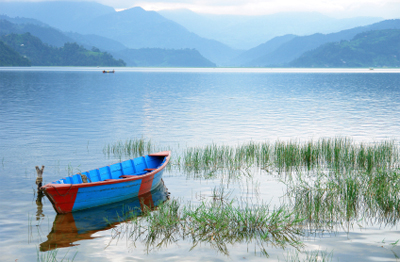
Pokhara, by its name, means a city of lakes and ponds, as there are numerous beautiful lakes where you can boat and literally drown your sorrows. And these lakes aren’t the only thing to blow your mind in Pokhara.


Pokhara is the second largest city of Nepal after Kathmandu. It is just at a distance of 200 kms from the capital city, and is easily accessible. There are numerous tourist buses, micro buses and local buses that take passengers in and out of Pokhara every day. Just five hours drive from Kathmandu, and you end up in a completely different place, with a completely different landscape and an entirely different feel from the buzzing hubbub of Kathmandu.
Pokhara is the home to numerous lakes and caves, a modern yet welcoming city life and not to mention, a plethora of peaks of the Himalayas. The lakes in Pokhara include Fewa Lake, Begnas Lake, Rupa Lake, Gude Lake, Neurani Lake and Maidi Lake among many others. The peaks than can be closely observed from Pokhara include Dhaulagiri, Annapurna I and Manaslu as these are within 30 miles from the city, and all of these peaks are more than 8,000 meters high. The city is also the gateway for trekking to the Annapurna Circuit. The notable caves here are Bat Cave, Mahendra Cave and Gupteshwor Cave among others.

There are two major notable hilltops in Pokhara that serve as a perfect getaway, the World Peace Pagoda at the southern shore of Fewa lake and Sarangkot, a beautiful hill at the north-west part of Pokhara. The newest attraction of Pokhara is Paragliding. Now you can paraglide from Sarangkot over the famous Fewa Lake and land at the bottom of the city. Other adventure sports in Pokhara include canyoning, base diving, kayaking, mountain biking and rock climbing.
One of the tourist attractions in Pokhara is Lake Side, a small part of the city famous for its ultra-modern restaurants and night clubs. Lake Side is the place to be if you want to experience the night life of Pokhara. There are numerous pubs, clubs and discos here to give you the taste of nightlife of Pokhara.

Words are not enough to describe the amount of fun you can have in Pokhara, the only way to experience the city is by going there and receiving what delights it has to offer. So, have Pokhara on your top list of places to travel when you are in Nepal.


Monday, March 21, 2016


Tourism in Nepal


Tourism in Nepal info
Nepal tourism is highly popular as it has the highest mountain peak of the world, the Mount Everest. Tourism in Nepal is filled with activities like trekking, hiking, mountaineering, jungle safari, rafting, tours and so on. It is truly a traveler paradise as adventure tourism is something which can be enjoyed to a great extent in Nepal. Nepal tourism consists of many wonderful places to visit and the country is loaded with spectacular views of various landscapes. The birth place of Siddhartha Gautama Buddha, Lumbini falls to the south of Nepal and is one of the highlights of tourism in Nepal. Tourism industry is the largest service industry and source of foreign exchange and revenue; it is the main source of economic sustenance after agriculture in Nepal. Tourism in Nepal has been seeing increase in the number of visitors each year which only reflects the growth of this industry in Nepal. There are famous pilgrimage destinations like; Pashupatinath, Muktinath, Swargadwari temple, Gosainkunda Lake, Halesi, Khaptad, Gadimai, Kankalini, Pathibhara, Budhasubba, Bishnupaduka, Dantakali, Baraha Kshetra, temples at Devghat, Manakamana temple which is in the Gorkha district and more in Nepal. There is no dearth of activities that one could undertake in their trip to Nepal. The popular tourist destinations in Nepal are, the capital of this place Kathmandu, The Kathmandu valley, Chitwan, Jankapur, Pokhara, Bhaktapur, Patan, Palpa, Ilam Nagarkot, Annapurna region, Everest region, Langtang region and many more places.

Popular tourism types in Nepal are business, adventure, cultural, sustainable / Eco-tourism, pilgrimage, educational, sports, rural, medical, backpacker, Geo tourism etc. Tourism in Nepal is also boosted with the adventure activities like; ice-climbing, trekking, hiking, rock climbing, paragliding, jeep flyer, bungee jumping, jungle safari, mountain biking, white water rafting and more. For those who love adventure travel, Nepal offers endless options along with the beautiful views of the landscapes. Other popular tourist activities which are part of tourism in Nepal are city tours, cultural tours, bird watching, boating and so on. A tourist not only gets to enjoy the trip with majestic views of the various peaks but also gets an opportunity to understand the culture, hospitality of Nepali people and village life of this country. Some popular travel trips to Nepal are listed here that provide a taste of real Nepal tourism.

Packages for tourism in Nepal


Everest base camp trek        
 Gokyo lakes trek
Annapurna base camp trek                  Annapurna circuit trek
Island Peak climbing                                 Everest view trek
Everest expedition          
Mera peak climbing
Kanchenjunga base camp trek         
 Pisang Peak climbing
Around Dhaulagiri trek                           Jomsom Muktinath trek
Langtang valley trek                               
   Poon hill trek
Makalu Base camp trek                            Upper Mustang trek
Manaslu circuit trek                                  Rolwaling valley trek
Everest trekking                                           Lower Dolpo trek
Annapurna trekking                                 
Upper Dolpo trek
Langtang trekking                                        Trishuli River rafting
Bhote Koshi rafting                                     Koshi tappu jungle safari
Sun Koshi river rafting                              Annapurna hiking
Karnali river rafting                                     Everest hiking
Chitwan jungle safari                                  Lumbini tour
Bardia Jungle safari                                    Pokhara city tour

Nepal tourism is also popular due the national parks of this country and it covers the names like Chitwan National Park, Langtang National Park, Rara National Park, Sagarmatha National Park, and Bardia National Park, Makalu barun national park and so on. Tourism Nepal attracts lots of tourists to catch glimpses of the famous peaks like Mount Everest, Makalu, Cho Oyu, Manaslu, Lhotse, Annapurna I, Himalchuli, Kanchenjunga, Nuptse, Kalapatthar along with many others. Nepal tourism is not something which is restricted to any one particular activity but has something for everybody. For those who love sightseeing, the views here are simply awesome for adventure travelers there are many options for those who wish to discover wildlife, this place is filled with lots of animals and birds. Elephant safari in Nepal is also one of major attractions of this place. Best season for travel in Nepal are the months of Sept, Oct, Nov in autumn and March, April, May in spring. There are several tourism attractions, nature blessed many resources and make perfect destination offers most dramatic sceneries in the world. You are welcome in Nepal and invite you to visit Nepal once in a life time.

Sunday, March 20, 2016

 The Capital City : Kathmandu

 Kathmandu is the capital and largest metropolitan city of Nepal. The city is the urban core of the Kathmandu Valley in the Himalayas, which also contains two sister cities namely Patan or Lalitpur, 5 kilometers (3.1 mi) to its southeast (an ancient city of fine arts and crafts) and Bhaktapur, 14 kilometres (8.7 mi) to its east (city of devotees). It is also acronymed as 'KTM' and named 'tri-city'. Kathmandu valley is only slightly smaller than Singapore in terms of area.

The city stands at an elevation of approximately 1,400 metres (4,600 ft) in the bowl-shaped valley in central Nepal surrounded by four major mountains, namely: Shivapuri, Phulchowki, Nagarjun and Chandragiri. It is inhabited by 949,486 (2009) people. The Kathmandu valley with its three districts including Kathmandu District accounts for a population density of only 97 per km2 whereas Kathmandu metropolitan city has a density of 13,225 per km2. It is by far the largest urban agglomerate in Nepal, accounting for 20% of the urban population in an area of 5,067 hectares (12,520 acres) (50.67 square kilometres (19.56 sq mi)).
Kathmandu is not only the capital of the Federal Democratic Republic of Nepal but also the headquarters of the Central Region (Madhyamanchal) among the five development regions constituted by the 14 administrative zones of Nepal located at the central part of the country. The Central region has three zones namely, Bagmati, Narayani and Janakpur. Kathmandu is located in the Bagmati Zone. Kathmandu, as the gateway to Nepal Tourism, is the nerve centre of the country’s economy. With the most advanced infrastructure among urban areas in Nepal, Kathmandu's economy is tourism centric accounting for 3.8% of the GDP in 1995–96 (had declined since then due to political unrest but has picked up again).
The city’s rich history is nearly 2000 years old, as inferred from an inscription in the valley. Its religious affiliations are dominantly Hindu followed by Buddhism. People of other religious beliefs also live in Kathmandu giving it a cosmopolitan culture. Nepali is the common language of the city, though many speak the Nepal Bhasa Newari as it is the center of theNewar (meaning: citizens of Nepal) people and culture. English and Hindi are understood by all of the educated population of the city. Besides a significant number of the population speaks any of the foreign languages like : French, German, Chinese, Hebrew, Korean etc. The literacy rate is 98% in the city.
Kathmandu is now the premier cultural and economic hub of Nepal and is considered to have the most advanced infrastructure among urban areas in Nepal. From the point of view of tourism, economy and cultural heritage, the sister cities of Patan(lalitpur) and Bhaktapur are integral to Kathmandu. Even the cultural heritage recognition under the World Heritage list of the UNESCO has recognized all the monuments in the three urban agglomerates as one unit under the title "Kathmandu Valley-UNESCO World Heritage Site.

Something about Nepal!!!

The most beautiful country in the world!

Flag of Nepal

Nepal (नेपाल) has its flag red with a blue border around the unique shape  of two overlapping right triangles. The smaller, upper triangle has a white stylized moon and the larger and lower triangle displays a white 12-pointed sun. The color red represents the rhododendron (the National flower of Nepal) and the color red is sign of victory and bravery. The blue border signifies peace and harmony; the two right triangles are a combination of two single pennons (pennants) that originally symbolized the Himalaya Mountains.  The moon represents the serenity of the Nepalese people and the shade and cool weather in the Himalayas, while the sun depicts the heat and higher temperatures of the lower parts of Nepal. The moon and the sun are also said to express the strong belief that the Nepal will be there in the earth as long as Sun and Moon are in the sky.
Nepal is the only country in the world with triangular flag.

Geography

Nepal is in Southern Asia, between China and India. It covers total area of 143,351 sq km and its boundary is 2,926 km long in total, bordered by China 1,236 km and India 1,690 km. It is a landlocked country. 
The weather and climate varies from hot summers to severe winters. Nepal has varieties of lands as it has weather and people. The land starts from 70m from sea level from Kanchan Kalan in Terai and passes though hilly region to the world's highest point Mount Everest at 8,850 m.
Nepal is known for its natural beauty and it has its own cultures. It has more than 70 ethnic groups and more than 60 different languages are spoken in different parts of Nepal. Nepali is the national language of Nepal. People practice several religion. Till now Hinduism and Buddhism have the largest population.
Kathmandu is the capital, and Nepal has 30 millions people.